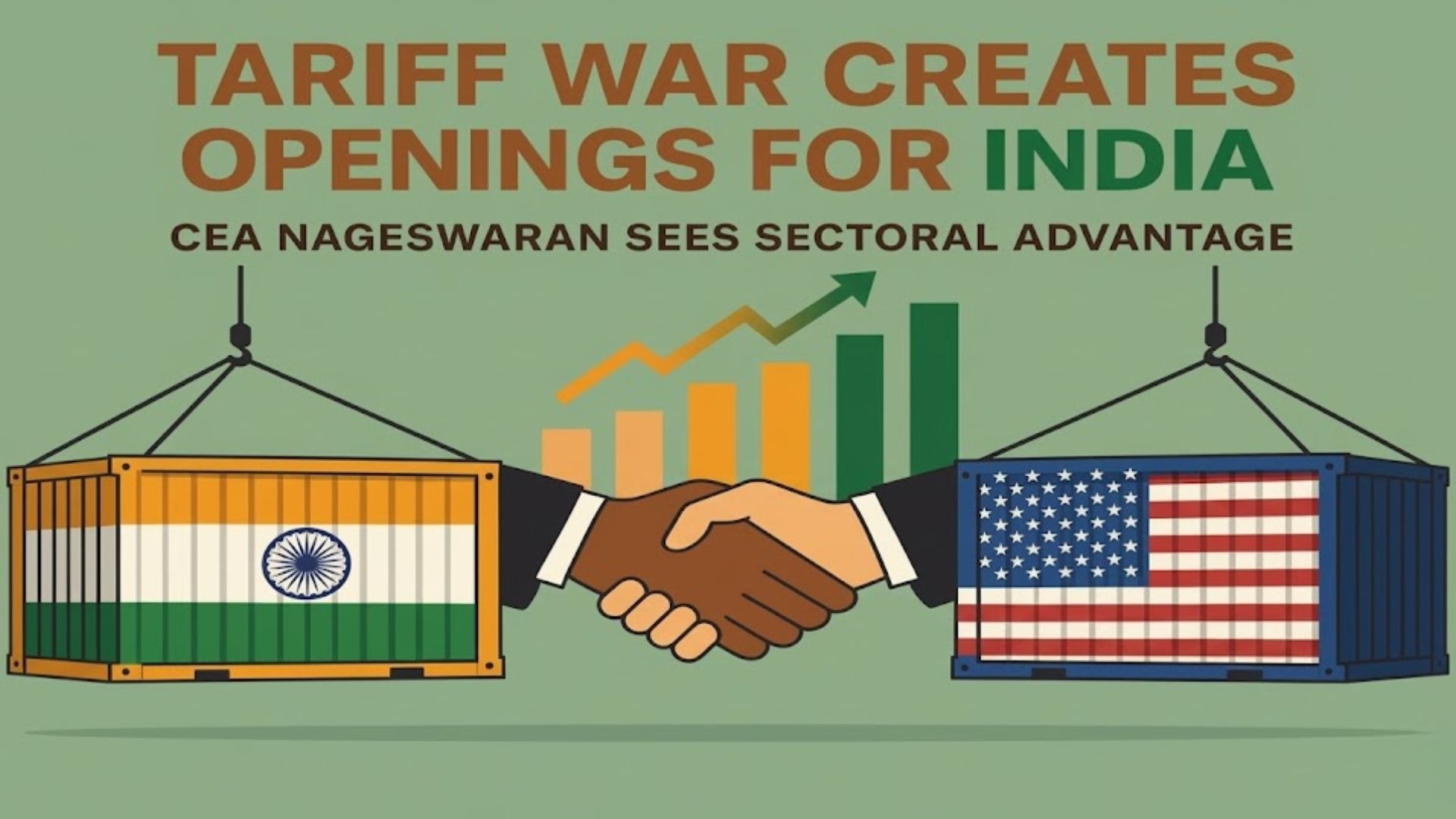
Tariff When people hear the word Tariff, it often sounds like something meant only for economists, trade experts, or government officials sitting inside formal meetings. But the truth is very different. A Tariff is not just a policy word. It is something that can quietly affect the price of a phone, the cost of groceries, the future of factories, the mood of financial markets, and even the hiring decisions of businesses. That is why the debate around policy has become so important in today’s world. It is no longer a narrow trade issue. It is now part of the bigger story of how the global economy is changing.
The reason Tariff policy matters so much today is simple. The world economy is deeply connected, but at the same time it is also full of tension. Countries want growth, but they also want safety. They want low-cost imports, but they also want strong domestic industries. They want open trade, but they do not want to depend too heavily on foreign supply when global tensions rise. This push and pull has made the Tariff one of the most talked-about tools in modern economic policy.
| Detail | Information |
|---|---|
| Main Keyword | Tariff |
| Article Focus | How tariff policy affects trade, prices, jobs, investment, and global growth |
| Style | Engaging, simple, human touch |
| Tone | NDTV / India Today style |
| Keyword Goal | Natural use of Tariff |
For many people, the effects of a Tariff are not always visible at first. It does not arrive like a dramatic headline in everyday life. Instead, it moves quietly. A product becomes more expensive. A company delays investment. A factory gets temporary relief. Another business starts feeling pressure because its imported materials now cost more. Over time, these small changes add up, and that is when people begin to see that Tariff policy is not just about trade. It is about daily life, household budgets, jobs, and long-term economic direction.
What a Tariff Really Means in Simple Words
At the most basic level, a Tariff is a tax placed on imported goods. When a country adds a Tariff to a product coming from abroad, that product usually becomes more expensive. After that, businesses have to decide what to do. They may absorb the extra cost. They may pass some of it to consumers. They may search for another supplier. They may shift production. Or they may simply slow down and wait for more clarity.
This is why the word Tariff should never be seen as a dry technical term. It creates a chain reaction. If imported steel becomes costlier, it can affect vehicles, construction, machinery, and appliances. If electronics parts face a Tariff, then the price of final products may rise too. If food imports become more expensive, families can feel the impact in household spending much sooner than expected.
That is what makes the
so important. It may begin at the border, but it does not stay there. It travels through supply chains, into factories, into stores, into shopping carts, and eventually into the daily decisions people make about spending and saving.
Why Governments Use Tariff Policies
If a Tariff can raise costs and create uncertainty, then why do governments keep using it? The answer is that a Tariff can also serve political, economic, and strategic goals. Governments may use a Tariff to protect local industries from cheaper foreign products. They may use it to encourage companies to produce more at home. They may use it in response to trade disputes. And sometimes they use it as pressure in wider geopolitical negotiations.
From a political point of view, the idea of a Tariff can sound very attractive. It gives leaders a chance to say they are defending domestic jobs, protecting national industries, and standing up for the country in global trade. These messages can be powerful because they connect directly with people who feel left behind by economic change.
But the full picture is rarely simple. A Tariff can help one industry while hurting another. It can support producers in one sector while raising costs for businesses that depend on imported inputs. It can also invite retaliation from other countries, which may then impose tariffs on exports in return. That is why Tariff policy often creates both winners and losers at the same time.
Tariff and the New Mood of the World Economy
The global economy today is not moving through a calm period. It is shaped by strategic competition, supply chain worries, geopolitical rivalry, and growing concern over economic dependence. In this atmosphere, the Tariff has returned as a major policy tool because many countries are no longer focused only on efficiency. They are now also thinking about resilience, control, and national strength.
This shift in mood is important. For many years, the broad direction of global trade was toward lower barriers and deeper integration. But now the atmosphere is more cautious. Governments are more willing to use a Tariff when they believe domestic interests are at risk. This tells us something important. The Tariff is no longer seen by many policymakers as an outdated trade barrier. It is increasingly treated as part of modern economic strategy.
That change is shaping the global economy in a big way. It is affecting where companies invest, how supply chains are built, and how countries think about trade relationships. In other words, the Tariff is now influencing not just prices, but the entire tone of the global economic system.
How Tariff Policy Affects Prices
The first thing most people notice about a Tariff is the impact on price. If imported goods become more expensive, someone must carry that extra cost. Sometimes businesses absorb part of it. Sometimes they cut margins. But often, at least part of the burden ends up with consumers.
This is why a
can put upward pressure on prices in many parts of the economy. Even when a final product is assembled domestically, the materials or parts inside it may come from abroad. If one key component faces a Tariff, the whole product can become costlier. That is how trade policy can quietly feed into inflation concerns.
This creates one of the biggest tensions around the
debate. On one side, it may offer protection to domestic producers. On the other side, it can make life more expensive for households and businesses. That tension is at the heart of many economic arguments today. People want strong local industry, but they also want affordable goods. The
sits right in the middle of that conflict.
Tariff and the Business Decision Chain
A Tariff does more than change price. It changes business behavior. Companies make decisions based on cost, timing, confidence, and predictability. When tariff policy shifts, businesses often become more cautious. They may postpone expansion. They may delay hiring. They may hold back on investment. They may also rethink where they buy materials and where they build products.
This is where the Tariff becomes even more powerful than it first appears. Its biggest effect is not always the tax itself. Sometimes the bigger issue is uncertainty. If businesses do not know whether tariffs will rise, fall, expand, or trigger retaliation, they slow down. And when enough businesses slow down at the same time, the wider economy begins to feel weaker.
This is why
policy affects mood as much as money. It influences confidence. And confidence is one of the invisible foundations of economic growth. When businesses feel uncertain, they do not move boldly. They wait. That waiting can become its own kind of economic drag.
Why a Tariff Can Help Some Workers and Hurt Others
One of the strongest arguments in favor of a is job protection. If a local industry is struggling against low-cost imports, then a Tariff may give that industry space to survive. A factory may keep running. A producer may regain market share. Workers in that sector may feel less vulnerable to foreign competition.
This is why Tariff policy often gets strong support in regions where manufacturing decline has caused real pain. People in such places do not think about trade as an abstract theory. They think about closed plants, shrinking towns, and lost security. To them, a can sound like a form of economic defense.
But once again, the story is not simple. A that helps one group of workers can hurt others. If a manufacturer pays more for imported materials, it may struggle to compete and may even reduce jobs. If another country responds with tariffs of its own, exporters can suffer too. So while a may save jobs in one sector, it can create new pressure in another.
This is why the debate is always emotionally intense. The benefits are visible and immediate for some groups, while the costs are spread more widely across others.
Tariff and the Reshaping of Supply Chains
One of the biggest long-term effects of a
is the way it reshapes supply chains. Modern production is not simple. A product may be designed in one country, use raw materials from another, contain parts from several more, and be assembled somewhere else entirely. When a new
enters that system, companies start rethinking everything.
Some firms begin looking for alternative suppliers. Some move production closer to their main market. Some split their supply chains across more countries so they are less exposed to sudden policy shifts. Others focus more on regional manufacturing instead of global networks.
This is where the Tariff starts affecting geography itself. It changes where factories are built, which countries attract investment, and how global trade routes evolve. Over time, these changes can become huge. The Tariff does not only raise cost today. It can also help decide what the trade map looks like tomorrow.
The Strategic Side of Tariff Policy
In the modern world, a is often about much more than economics. It is increasingly tied to strategy. Governments worry about critical technologies, industrial independence, energy systems, advanced manufacturing, and national security. In that context, a Tariff is sometimes used not only to protect jobs, but also to strengthen domestic capacity in key sectors.
This makes the debate even more serious. It is no longer just about whether imported goods are cheap or expensive. It is also about whether countries feel too dependent on foreign production in areas they consider essential. Supporters of tariffs say this kind of policy can help rebuild domestic strength. Critics say it can distort markets, raise consumer costs, and create further global friction.
Both sides are responding to real concerns. That is why the Tariff has become such a central part of today’s economic conversation. It now sits at the point where trade, politics, and national strategy all meet.
Tariff, Inflation, and Consumer Mood
Inflation has become one of the most sensitive issues in many economies, and a Tariff can add to that pressure. When households are already worried about rising living costs, even a small increase in prices can change public mood. This is where Tariff policy becomes more than a trade tool. It becomes a political risk.
People may support a Tariff when it is framed as protection for domestic industry. But that support can weaken if they begin to notice rising prices in shops and online marketplaces. The problem is that the benefits of a are often concentrated and visible in certain sectors, while the costs are more spread out and appear slowly through household budgets.
This makes Tariff policy difficult for governments to manage. It may deliver a strong political message at first, but if consumers start feeling squeezed, the mood can change quickly. That is why the Tariff is not only an economic instrument. It is also a test of how much pain the public is willing to accept in exchange for the promise of protection.
Why Tariff Uncertainty Can Be Worse Than Tariff Itself
A stable rule, even if imperfect, is often easier for businesses than a constantly changing one. This is especially true with a If companies know the rules and trust they will remain steady, they can adjust. But if tariffs rise, pause, expand, or get used repeatedly as negotiation tools, uncertainty grows fast.
That uncertainty can be more harmful than the
itself. Businesses start waiting for clearer conditions. They hesitate before committing capital. They avoid long-term moves. They postpone recruitment. This is how a Tariff creates economic drag even before its full cost is felt.
The modern economy runs heavily on expectations. If expectations become unstable, growth can weaken. That is why many business leaders worry not only about the existence of a Tariff, but also about the possibility that trade rules may keep changing without warning.
Tariff and the Slowing Momentum of Global Trade
A Tariff may not always cause immediate collapse in trade, but it can gradually slow momentum. Sometimes trade appears strong for a while because businesses rush shipments before tariffs take effect. Sometimes demand in other sectors keeps overall activity going. But over time, repeated trade friction changes behavior.
Companies become more defensive. Countries become more cautious. Investment plans are adjusted. Growth loses energy. This is how the can create long-term drag even if short-term numbers do not immediately look disastrous.
This slow-burn effect is one reason
policy is shaping the global economy so strongly right now. It does not always explode like a sudden crisis. Instead, it gradually changes decisions, confidence, and trade patterns until the whole system begins to move differently.
Tariff and the Politics of Economic Nationalism
A often fits neatly into a broader political message about national strength. Leaders can present it as a tool for defending the country, supporting domestic industry, and reducing reliance on outside powers. That message resonates strongly, especially when people feel that open global trade has not benefited everyone equally.
This is why the debate is often emotional. It is not only about customs duty. It is also about identity, fairness, and control. Many voters want to believe that national policy can still shape economic destiny. A gives politicians a very visible way to act on that belief.
But economic nationalism through
policy also comes with trade-offs. If every country becomes more defensive, global cooperation becomes harder. Trade disputes increase. Supply chains become less efficient. Growth becomes more fragile. So while a may sound strong in political language, its economic results can be far more mixed.
Can a Tariff Ever Be Useful
Yes, a
can be useful in certain cases. It can give temporary support to industries facing unfair competition. It can provide breathing space for sectors that need time to adjust. It can also be part of a broader industrial policy if it is used carefully and combined with investment, skills development, and long-term planning.
But a
works best when it is clear, targeted, and limited by strategy. If it is used too broadly or too casually, it becomes a blunt instrument. It may raise costs without solving the deeper problem. It may protect a weak industry for a while without helping it become stronger in the long run.
That is why the real question is not whether a
is always good or always bad. The better question is whether it is being used with discipline, clarity, and awareness of the wider consequences.
The Human Story Behind the Tariff Debate
Behind every
debate are real people. A factory worker hoping a local plant survives. A small business owner worried about the cost of imported materials. A farmer concerned about export markets shrinking because of retaliation. A family noticing prices rising in the supermarket. A policymaker trying to balance national strength with economic pain.
This is why the Tariff debate feels so charged. It touches real hopes and real fears. It can promise protection, but it can also create new pressure. It can sound like a tool of strength, but it can also make the economy feel more uncertain. And because its effects are not evenly spread, different people experience the same
in very different ways.
That human side matters. It reminds us that
policy is not only about border taxes or trade spreadsheets. It is really about how economies are organized, who carries the burden of change, and what kind of future countries are trying to build.
Final Thoughts
The word
may sound small, but its impact is enormous. A
can raise prices, change supply chains, influence inflation, affect jobs, shape business confidence, and even alter geopolitical relationships. It can protect certain sectors while putting pressure on others. It can create a feeling of national control while also making trade more fragile.
That is exactly why
policies are shaping the global economy so powerfully today. The debate is no longer limited to trade experts. It now reaches into politics, industry, consumer life, and global strategy. Every major economy has to think about how open it wants to be, how protected it wants to feel, and what costs it is willing to accept along the way.
In the end, the Tariff debate is not really about one tax at the border. It is about how nations balance openness and protection, efficiency and resilience, affordability and strategic strength. It is about the choices that will define the next era of global economic life.
And that is why the story of the Tariff matters so much. It is not just a policy issue. It is one of the clearest windows into where the world economy is heading next.
FAQs
What is a tariff in simple words?
A Tariff is a tax placed on imported goods. It usually makes foreign products more expensive when they enter a country.
Why do governments use tariff policies?
Governments use a
to protect domestic industries, support local jobs, respond to trade disputes, or reduce dependence on foreign supply in key sectors.
Does a tariff always raise prices?
A Tariff often puts upward pressure on prices, but the exact effect depends on whether businesses absorb the cost or pass it on to consumers.
Can a tariff help the economy?
A Tariff can help certain industries or workers in some cases, especially when it is targeted and part of a wider plan. But it can also create costs and uncertainty elsewhere.