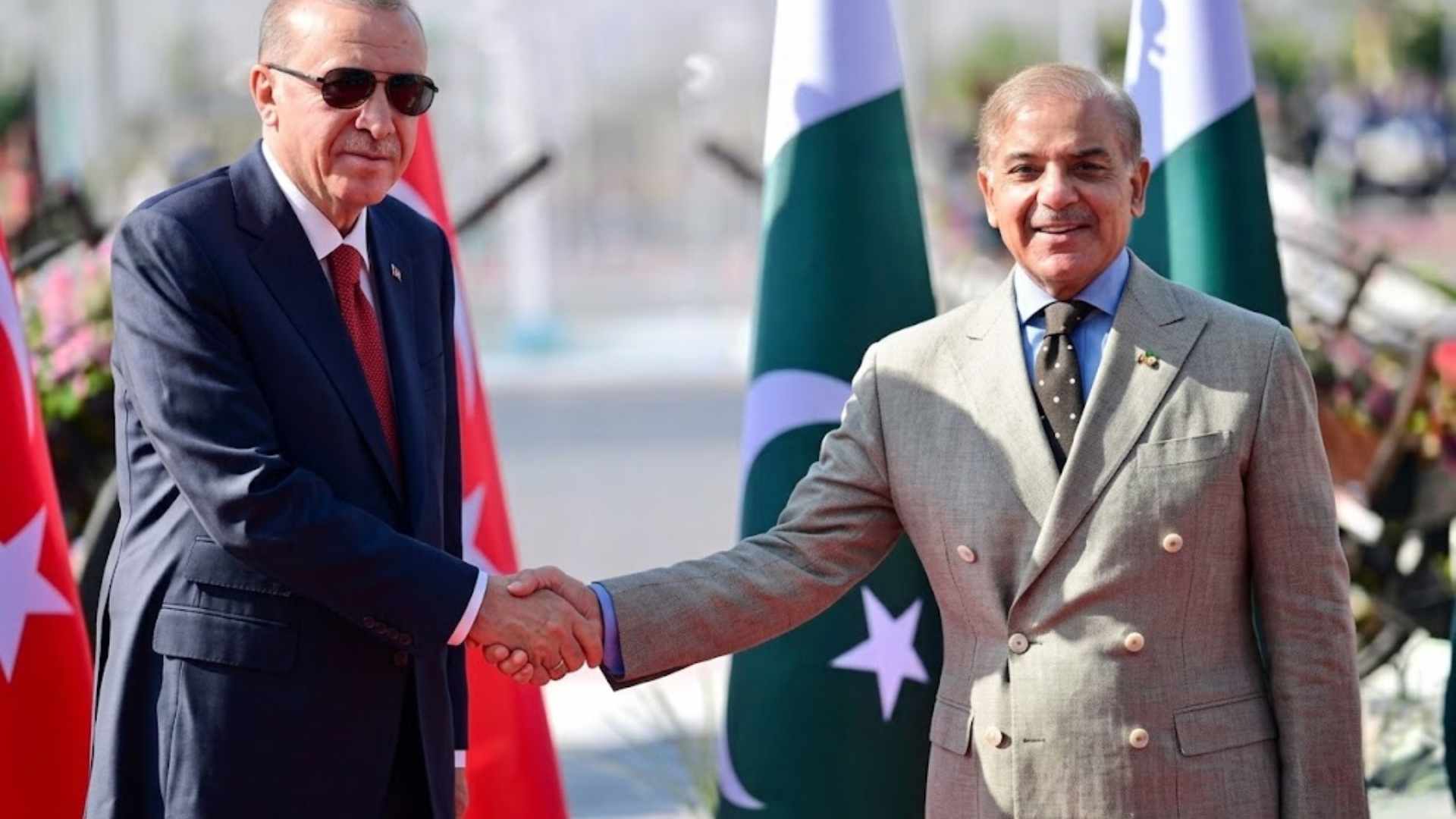
The reason Erdogan is back in the spotlight is not hard to understand. Turkey is sitting in one of the most sensitive strategic positions in the world, and 2026 has brought a fresh wave of diplomatic pressure around the Middle East, energy security, NATO politics, and Europe’s wider security anxieties. Turkey’s leadership has recently spoken about the need for diplomacy around Iran, warned against wider regional fallout, and kept trying to position Ankara as a state that can still talk across difficult divides.
This matters because Erdogan has spent years building an image of Turkey as more than a country that simply reacts to events. He wants Turkey to be seen as a country that shapes events, influences talks, and matters whenever the region enters a dangerous phase. That ambition can create opportunity, but it also creates pressure. The more a leader wants to act like a diplomatic power broker, the more he is judged every time a crisis spreads.
| Key area | Why Erdogan is under pressure in 2026 |
|---|---|
| Iran crisis | Turkey is pushing diplomacy while trying to avoid wider regional escalation |
| Energy risk | Any instability around major shipping routes can quickly affect Turkey’s economy |
| NATO questions | Ankara is still inside the alliance, but trust and expectations remain complicated |
| Europe ties | Turkey remains important to European security even when political ties feel uneasy |
| Israel and Gaza | Ankara’s sharp rhetoric keeps Turkey visible in regional debate |
| Regional balancing | Turkey is trying to talk to rivals, partners, and neighbors at the same time |
That is exactly what is happening now. The regional mood is tense. Iran-related diplomacy is fragile. Shipping route fears keep energy markets on edge. Europe is still rethinking its security future. NATO remains important but complicated. And the war-linked anger around Israel and Gaza continues to shape public feeling across the region. In that setting, Erdogan is trying to protect Turkey’s interests while also keeping Turkey visible as a serious player. That is not an easy balance.
Turkey’s geography is both its strength and its burden
One reason Erdogan feels constant diplomatic pressure is that Turkey’s geography is both a gift and a burden. Turkey is close enough to the Middle East to be affected by its crises, connected enough to Europe to matter in Western security thinking, and strategically placed enough to matter for energy flows, migration conversations, and military planning. That kind of location gives a leader leverage, but it also removes the luxury of staying distant.
A country far away from regional conflict can speak more casually. Turkey cannot. When instability grows, Ankara has to think about markets, borders, public sentiment, alliance relations, and economic shocks almost immediately. That is why Erdogan often speaks in a way that sounds urgent during regional crises. He knows that Turkey does not just observe this part of the world. It absorbs the pressure from it.
This is also why Turkey keeps trying to play multiple roles at once. It wants to be a NATO member, but also a country that can keep channels with difficult neighbors. It wants to criticize Israel sharply, while still protecting its broader strategic standing. It wants to talk about peace and diplomacy, while also preserving deterrence and national strength. These are not small contradictions. They define the daily tension of Turkish diplomacy, and they shape why Erdogan keeps returning to the center of global attention.
The Iran issue has become one of the biggest sources of pressure
One of the clearest reasons Erdogan is under diplomatic pressure right now is the Iran file. Turkey has recently welcomed ceasefire efforts and called for full implementation, while also warning against a broader regional explosion. Ankara’s message has been that diplomacy must not collapse, because the cost of a wider war would be severe for the region.
This is not only about idealism. It is practical. Turkey knows that a major Iran-linked escalation would affect trade, energy, border security, business confidence, and regional stability. In other words, the crisis is not abstract for Ankara. It is tied to real economic and strategic consequences. That is why Erdogan has strong reasons to sound active rather than passive. If Turkey looks absent during a moment like this, it risks appearing weaker than the role it wants to claim. If it looks too involved, it risks being dragged into tensions it cannot fully control.
There is also another layer here. Turkish-linked reporting and public discussion have suggested that Turkey tried to keep communication space alive during recent tension. Even when Ankara does not reveal every detail publicly, the broader diplomatic picture suggests Turkey wants to be seen as useful when others are stuck. That helps Erdogan project Turkey as a state with relevance beyond rhetoric. But usefulness comes with burden. Once a country presents itself as a bridge, people start asking whether that bridge can actually hold.
Energy fears make diplomacy feel urgent, not symbolic
A lot of foreign policy commentary can sound distant from normal life, but energy fears make the issue much more immediate. When instability builds around major regional shipping routes, countries like Turkey cannot treat that as a side issue. Energy prices, transport confidence, business costs, and public inflation worries can all feel the impact. Turkish officials have recently spoken about risks tied to maritime disruption and regional conflict spillover.
This matters because Erdogan is not governing in a vacuum. Turkish households, businesses, and markets all watch the economic effect of regional instability. If a diplomatic crisis drives up cost pressure, it becomes part of domestic politics too. So when Ankara calls for restraint or diplomatic solutions, it is not simply trying to sound responsible. It is trying to protect itself from an economic chain reaction.
That is one of the reasons the current moment feels heavy. Diplomacy is no longer only about statements. It is about whether Turkey can keep strategic calm in a neighborhood where disruption quickly becomes expensive. In that sense, Erdogan is facing not just political pressure, but economic pressure disguised as foreign policy urgency.
Erdogan wants Turkey seen as a state that can talk to everyone
A major part of the Turkish diplomatic style under Erdogan has been the effort to keep communication channels open with multiple sides, even when those sides deeply distrust each other. That approach helps Turkey claim a role that many countries cannot. It can speak inside NATO structures while also engaging countries outside the Western bloc. It can criticize regional actors harshly while still trying to preserve some channel of contact. It can sound confrontational in public and pragmatic in diplomacy.
This strategy has clear advantages. It keeps Turkey relevant. It means Ankara is rarely totally shut out of a major regional conversation. And it helps Erdogan project the image of a leader who is not waiting for instructions from others. That style fits his broader political identity. He has long preferred to present himself as assertive, independent, and unwilling to let Turkey be treated as a junior player.
But the same approach also creates skepticism. Partners sometimes wonder whether Turkey is too flexible. Rivals sometimes doubt its sincerity. Western allies sometimes question whether Ankara is fully aligned. Regional actors sometimes suspect Turkey is using diplomacy mainly to expand influence. That means Erdogan often receives attention, but not always trust. And in diplomacy, attention without trust can become a very exhausting form of power.
NATO still matters, but so do the tensions inside it
Another major reason Erdogan remains under pressure is Turkey’s place inside NATO. Turkey is still a critical alliance member because of its military weight, geography, and strategic location. At the same time, relations between Ankara and some Western partners have often felt uneven, suspicious, or tense. Recent statements around NATO planning and future security uncertainty have kept Turkey central to alliance debate.
This creates a complicated reality. Erdogan wants Turkey to benefit from NATO’s security importance, but he also wants to resist the impression that Ankara must simply follow Western preferences quietly. That tension has defined much of Turkey’s alliance posture in recent years. It is inside NATO, but it often wants to remind others that it has its own red lines, its own regional logic, and its own ambitions.
In 2026, that balance feels even more delicate because European security anxiety remains high and the wider alliance is still thinking hard about future burden-sharing, deterrence, and strategic reliability. That means Turkey matters, but it also means Turkey is watched very closely. Erdogan is therefore operating in a space where every move can be read two ways: as valuable strategic independence or as unnecessary friction. That is one reason diplomatic pressure keeps building around him.
Europe needs Turkey, but trust remains incomplete
Europe’s relationship with Turkey under Erdogan has always carried a strange mix of necessity and discomfort. On one hand, Europe knows Turkey matters for migration, regional security, defense conversations, energy routes, and broader geopolitical balance. On the other hand, European leaders often remain uneasy about Turkey’s domestic politics, sharp rhetoric, and unpredictable turns in foreign policy tone. Recent contacts between Turkey and European leaders around regional crisis management show that, whatever the tensions, Ankara still cannot be ignored.
That is one reason Erdogan continues to draw attention in European capitals. He leads a country that is too important to sideline, but too difficult to embrace comfortably. This creates a diplomatic relationship built less on warmth and more on necessity. It is not always friendly, but it is always relevant.
For Turkey, this creates leverage. For Erdogan, it creates opportunity. He can remind Europe that Turkey matters whenever regional crisis grows. But it also means Europe often looks at Turkey through a suspicious lens, asking whether Ankara is acting as a partner, a critic, or both at once. In diplomacy, that kind of ambiguity can be useful for a while, but it also makes trust harder to deepen.
Israel and Gaza continue to shape Erdogan’s regional tone
No serious discussion of Erdogan in the current diplomatic climate can ignore Turkey’s rhetoric and positioning around Israel and Gaza. Ankara has taken a sharply critical line toward Israel during the Gaza war period, and that language has helped keep Turkey highly visible across the Muslim world and broader regional debate.
This matters because it fits Erdogan’s long-standing instinct to speak in a morally charged and emotionally direct style on issues that resonate strongly with public feeling. For supporters, this makes him look bold and principled. For critics, it can make him look confrontational or selective. But either way, it keeps Turkey loudly present in the conversation.
The challenge is that rhetorical visibility is not the same thing as diplomatic control. Turkey may win attention through strong language, but the region still expects actual influence too. That is where the pressure grows. If Erdogan speaks strongly on Gaza, then observers start asking what Ankara can actually do beyond condemnation. If Turkey claims moral leadership, then expectations rise. And when expectations rise, diplomacy becomes harder.
Domestic politics always sits in the background
Foreign policy may look outward, but it is never fully separate from domestic politics. This is especially true for Erdogan, whose political style has often blended international positioning with domestic messaging. When Turkey faces regional crisis, the foreign policy language often also speaks to the home audience. It tells Turkish citizens that their country is important, alert, strong, and active.
This matters in 2026 because Turkey’s internal political and economic mood still affects how external diplomacy is received. A leader under domestic pressure often wants to project international authority. A country facing economic strain often wants to hear that it remains powerful and respected. In that sense, diplomacy is not only about foreign capitals. It is also about national confidence.
That does not mean Erdogan’s foreign policy is fake or purely theatrical. It means the domestic and external layers are intertwined. He knows that how Turkey appears abroad affects how he is judged at home. So every crisis becomes two stories at once: one about international strategy and one about domestic political image.
Erdogan’s style helps him stay central, but it also creates risk
One reason Erdogan remains such a visible international figure is his style. He does not speak like a cautious technocrat. He prefers a sharper, more emotionally charged, more politically confident tone. That makes him memorable. It helps him dominate headlines. It reinforces the idea that Turkey under his leadership will not quietly disappear into the background.
But style has a cost. The stronger the tone, the more likely it is to create resistance. The more a leader tries to dominate the diplomatic mood, the more others watch for inconsistency or overreach. This is why Erdogan is often both respected and distrusted, sometimes at the same time. His assertiveness gives Turkey profile, but it can also create friction that makes quiet diplomatic progress harder.
In easier times, this style can look like strength. In tense times, it can become harder to manage because every word carries more weight. That is part of what makes 2026 feel difficult for him. The region is volatile enough that even strong language needs careful handling.
Turkey wants influence without becoming trapped
At the heart of the current pressure on Erdogan is a basic strategic problem. Turkey wants influence, but it does not want entrapment. It wants to matter in Iran-related diplomacy, but it does not want to be dragged into war logic. It wants strong regional voice on Gaza, but it does not want to lose every working channel. It wants NATO relevance, but not NATO obedience. It wants Europe’s attention, but not Europe’s control.
This is a difficult balancing act for any country. For a country in Turkey’s position, it is especially difficult because every regional shock reaches it quickly. So the pressure around Erdogan is not only about what to say. It is about how to remain influential without becoming overcommitted. That is a narrow path, and it is easy to misstep on it.
The more unstable the region becomes, the harder this balancing act gets. That is why the current moment matters so much. Turkey is trying to be a player in a regional order that feels increasingly unstable. Under those conditions, even small diplomatic mistakes can become expensive.
Why global powers still watch Erdogan closely
Even leaders who dislike Erdogan’s style or disagree with his positions still watch him closely. That alone says something important. Turkey under his leadership remains too central to ignore. It matters for the Black Sea, the Middle East, NATO, migration routes, energy flows, and European security thinking. That gives Erdogan a kind of unavoidable relevance.
This does not mean he always gets what he wants. It means the world keeps having to factor him in. And in diplomacy, being impossible to ignore is itself a form of power. It keeps doors open, even when relationships are strained. It forces rivals and partners alike to calculate around Ankara’s position.
The downside is that relevance keeps expectations high. When the region is tense, people expect Turkey to say something useful, do something useful, or help stabilize something. That is part of the weight now sitting on Erdogan. He has spent years presenting Turkey as central. In 2026, the world is testing whether that centrality still produces results.
Final Thoughts
Erdogan is in the spotlight because Turkey is once again standing at the crossroads of too many urgent issues at once. Iran-related diplomacy, energy fears, NATO uncertainty, Europe’s strategic anxiety, and the continuing emotional force of Gaza have all combined to make Ankara impossible to ignore. That gives Turkey relevance, but it also gives Erdogan a very hard job.
He is trying to project Turkey as influential without letting it become trapped. He wants Ankara to speak strongly without losing diplomatic utility. He wants to benefit from Turkey’s geographic and strategic importance while managing the burden that same importance creates. That is why the pressure feels so intense now.
This moment shows both the strength and the difficulty of Erdogan’s foreign policy style. He has kept Turkey visible, central, and hard to bypass. But visibility is not peace, and centrality is not control. In a region where crisis spreads quickly, being central can feel less like an advantage and more like a test.
That is why Erdogan remains in the spotlight as new diplomatic pressure builds around Turkey. The country still matters enormously. The question now is whether it can turn that importance into stability rather than simply surviving from one regional shock to the next.