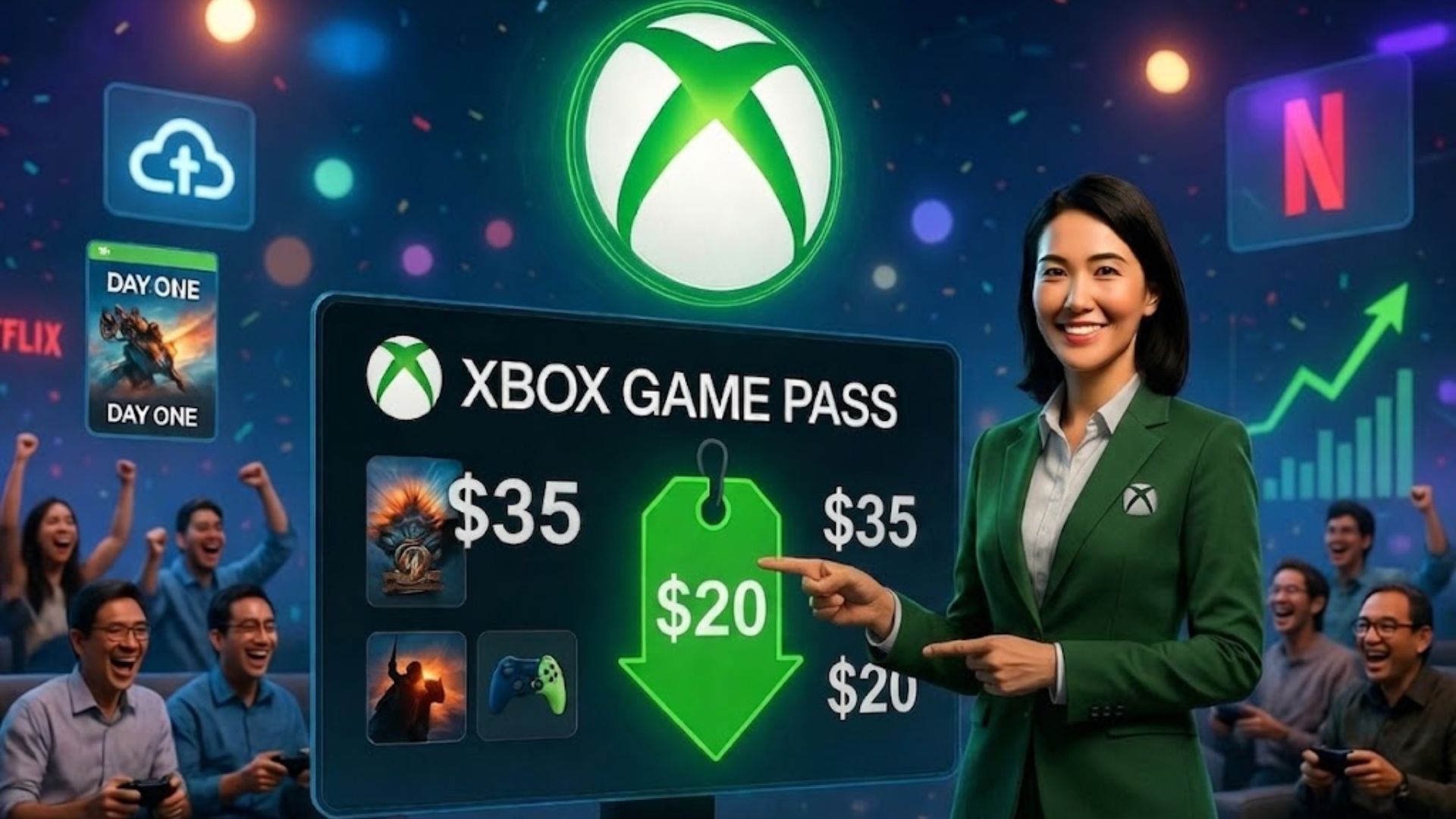
Xbox CEO Raises Fresh-The phrase Xbox CEO Raises Fresh Questions is getting attention because this is not just about one gaming subscription becoming expensive in the eyes of some players. It is about something much bigger. It is about how people now look at every monthly payment with more care than before. Xbox CEO Raises It is about how gaming, which was once mostly about buying a console and then picking games one by one, is now deeply tied to subscriptions, bundles, service models, and constantly changing value promises.
That is what makes this discussion so interesting and so emotional at the same time. When players talk about Game Pass pricing, they are not only talking about money. Xbox CEO Raises They are talking about fairness. They are talking about trust. They are talking about whether a service that once felt exciting and generous still feels like a smart part of their gaming life. And that is exactly why Xbox CEO Raises Fresh Questions has become such a strong phrase. It captures uncertainty, curiosity, frustration, and hope all in one line.
For years, Game Pass was treated like one of Xbox’s smartest moves. Xbox CEO Raises It gave the brand a fresh identity. Xbox CEO Raises It made people think of Xbox as a company that wanted to change how games were discovered and enjoyed. It made subscription gaming feel bold and modern. Xbox CEO Raises Players liked the idea that they could step into a large library of games without needing to buy every title separately. It felt flexible. It felt consumer-friendly. It felt like a future that made sense.
But the thing about value is that it never stays frozen. Xbox CEO Raises What feels affordable and exciting at one moment can start feeling heavy later if prices rise, if the player’s habits change, or if the emotional shine wears off. That is where the debate becomes real. Xbox CEO Raises A service can still be good and yet still start feeling expensive. A service can still be large and yet still stop feeling essential. Xbox CEO Raises;;;;;;;;;;;;;;;;;;;;;;;;;;;;;;;;;;;;;;;;;;;;;;;;;;;;;;;;;;;;;;;;;;;;;;;;;;;;;;;;;;;;;;;;;;;;;;;;;;;;;; A service can still be impressive and yet still make users pause before renewal.
| Detail | Information |
|---|---|
| Main Keyword | Xbox CEO Raises Fresh Questions |
| Topic | Game Pass price and player value debate |
| Focus | Subscription gaming, affordability, and trust |
| Platform | Xbox ecosystem |
| Article Tone | Engaging, human, easy to read |
| Article Goal | Understand why players are rethinking value |
That pause is where the real story lives. Xbox CEO Raises And that is why Xbox CEO Raises Fresh Questions feels like more than a headline. It feels like a signal that the relationship between Xbox, Game Pass, and players may be entering a new phase.
Why this conversation feels so important right now
Xbox CEO Raises-The timing of this debate matters a lot. People today live inside a subscription world. They pay for streaming platforms, music apps, storage plans, premium tools, memberships, deliveries, and digital services without always noticing how quickly those costs pile up. A gaming subscription no longer sits alone in the budget. It sits next to many other monthly charges, all quietly asking for justification.
Xbox CEO Raises-That means the value conversation is sharper than it used to be. Players are not only asking whether Game Pass gives access to many games. They are asking whether Game Pass deserves its place in an already crowded monthly spending list. That question is much harder for any company to answer because it is no longer about gaming in isolation. It is about the total weight of modern digital life.
Xbox CEO Raises-This is why Xbox CEO Raises Fresh Questions sounds so relevant today. It reaches into the broader mood of the moment. People are more careful with money. They are more selective. They are more willing to cancel things that no longer feel essential. They are less impressed by theoretical value and more focused on real use. They want to know whether they are actually getting enough joy, enough convenience, and enough practical benefit from what they pay each month.
Xbox CEO Raises-That is a very different emotional environment from the early days of subscription excitement. In the beginning, access itself felt revolutionary. Now access is everywhere. So the bar is higher. Players want more than a large library. They want a reason to keep believing.
How Game Pass became central to the Xbox identity
Xbox CEO Raises-Game Pass did not become important by accident. It rose because it changed the way people talked about Xbox. Instead of only fighting the usual hardware battle, Xbox began pushing a broader idea. It was not just about what console sat under the TV. It was about what ecosystem offered a smarter way to play.
Xbox CEO Raises That shift was powerful. It allowed Xbox to speak in a more forward-looking way. It made the brand feel strategic rather than reactive. Even people who were not longtime Xbox users often admitted that Game Pass sounded like a brilliant move. It gave Xbox something distinctive. It created a new kind of loyalty. It invited players to think in terms of access and discovery instead of only purchases and exclusives.
Xbox CEO Raises That is why Xbox CEO Raises Fresh Questions matters so much. When the discussion touches Game Pass pricing and player value, it is not touching some side feature. It is touching one of the biggest pillars of Xbox’s modern identity. That makes the moment more serious and more revealing.
Xbox CEO Raises When a company’s flagship idea starts facing stronger affordability questions, the issue is not just operational. It is symbolic. People begin wondering whether the original promise is still intact. They begin questioning whether the product still reflects the same philosophy it once did. And once that happens, the conversation becomes much more emotional than a simple price chart might suggest.
Why players once saw Game Pass as a smart deal
Xbox CEO Raises One reason the current debate feels so strong is because Game Pass built its reputation around value from the very beginning. It was not sold as a luxury experience for only premium users. It was presented more like a clever gateway into gaming variety. It felt like an answer to the rising cost of buying individual games. It gave players the feeling that they could try more, risk less, and discover titles they might never have purchased outright.
That feeling mattered. It created goodwill. It made people talk about Game Pass almost as an idea rather than just a service. It represented flexibility. It represented abundance. It represented a new way of thinking about the gaming library.
So when Xbox CEO Raises Fresh Questions becomes the center of discussion, players naturally measure it against that earlier reputation. They remember what made Game Pass attractive in the first place. They remember how strong the value perception used to be. And that memory makes the current tension feel more noticeable.
If a service begins life as the hero of affordability, then any sign of becoming harder to justify will hit harder. People notice the contrast. They feel the shift more sharply. It is not just that the price may look different. It is that the emotional meaning of the service starts to change.
The deeper meaning of player value
Player value is one of those phrases that sounds simple until you actually try to define it. It is not just about numbers. It is not just about how many games are included. It is not just about whether the service is cheaper than buying titles individually. Real player value is personal. It is emotional. It depends on time, habits, excitement, and relevance.
A player may technically have access to hundreds of games and still feel unsatisfied if none of them are speaking to them in that moment. Another player may only use the service for a few months each year but feel it is worth every rupee or dollar during those periods. Someone else may keep the subscription active mostly out of habit, not because they are deeply engaged. All of these experiences are different, and they show why the question raised by Xbox CEO Raises Fresh Questions is so important.
Value in gaming is not just about catalog size. It is about how often the player finds something that genuinely pulls them in. It is about whether the subscription feels alive in their life or whether it has become another passive payment slipping through unnoticed. Once users start noticing that gap, the relationship changes.
And that is what makes subscription gaming tricky. The company can point to scale, content, and ecosystem benefits. But the player judges the service through personal experience. Did I actually use this enough? Did I feel excited enough? Did this subscription make my gaming life better this month?
Why the subscription model creates a different kind of pressure
A one-time purchase and a monthly subscription create very different emotions. When you buy a game once, the decision is finished. You own the access you paid for, and the mental pressure reduces. But with a subscription, the question returns again and again. Every month becomes a tiny test of continued trust.
This is why Xbox CEO Raises Fresh Questions feels so loaded. A subscription must keep earning its place. It cannot rely forever on past excitement. It must remain present in the user’s mind as worthwhile, current, and rewarding. The moment it starts feeling easy to skip, the entire model becomes more fragile.
This does not mean subscriptions are bad. It means they are psychologically demanding in a different way. They ask for repeated justification. They live in the world of recurring judgment. And in gaming, where free time is limited and player tastes shift quickly, that recurring judgment becomes even more intense.
A player may genuinely admire Xbox’s strategy and still cancel if the service no longer matches their current habits. That is not hostility. That is just how subscriptions work. Which is exactly why conversations about price and value feel so central. They are not side issues. They are the heart of the business.
The challenge of balancing affordability and ambition
Xbox is in a difficult position because Game Pass is not only supposed to feel affordable. It is also supposed to feel ambitious. It has to carry big games, create excitement, support strategy, and reinforce the brand’s image as a major force in gaming. Those goals are attractive, but they also create pressure on pricing.
A service built around major content and wide appeal naturally faces rising expectations. Players want strong day-one experiences, a quality catalog, consistent energy, and reasons to stay subscribed across the year. Delivering that kind of ecosystem is not simple. But from the player’s side, the business complexity matters less than the monthly bill.
This is where Xbox CEO Raises Fresh Questions becomes fascinating. It suggests that the tension between ambition and affordability may now be impossible to ignore. The service cannot only be big. It has to feel fair. It cannot only be powerful. It has to feel worth it.
That balance is hard. If Xbox pushes too much toward premium positioning, it risks losing the emotional accessibility that made Game Pass special. If it focuses too heavily on low pricing without sustaining appeal, it risks weakening the service’s long-term identity. Somewhere between those two pressures lies the future of the platform.
Why players are more skeptical of “huge libraries” now
There was a time when saying a service had an enormous library was enough to make it sound irresistible. But modern users have become more skeptical of that kind of selling point. They have learned that a large library does not always translate into real value for their personal habits.
Many players return to the same kinds of games. Some spend months in competitive titles. Some only have time for one major single-player experience at a time. Some enjoy browsing more than actually playing. And some keep subscriptions active for the possibility of using them rather than consistent use itself.
This is why Xbox CEO Raises Fresh Questions has such weight. It pushes the conversation past simple library size and into a more realistic question. How much of this value is actually reaching the player in a meaningful way?
A large catalog looks impressive, but value becomes personal very fast. A player may say, “Yes, there are hundreds of games here, but I only care about a few.” Once that happens, quantity alone stops being enough. The service needs to feel curated by relevance, not just scale.
And that is a challenge for every subscription platform, not just Xbox. Modern users have too many choices everywhere. Abundance is no longer automatically exciting. Sometimes it is tiring. Sometimes it even makes people more selective.
The pressure created by rising entertainment costs
Gaming does not compete only with other gaming expenses. It competes with everything else people do for leisure and comfort. Streaming movies, following sports, listening to music, going out, food apps, short trips, social plans, and even simple rest all sit in the same emotional budget space.
That broader reality makes Xbox CEO Raises Fresh Questions more meaningful. It reminds us that a gaming subscription is not judged in isolation. When people feel their overall entertainment spending has become too high, they begin cutting wherever excitement feels weakest. And because Game Pass is a subscription, it becomes very easy to place under scrutiny.
This is why the player value question matters now more than ever. If the service feels central to someone’s life, they will protect it. If it feels optional, they will examine it. If it feels expensive and emotionally distant at the same time, they may walk away without much hesitation.
That is not a sign that the service has failed completely. It simply shows that the subscription economy is entering a more mature and demanding stage. Users are learning to be more intentional. They are asking not what they could use, but what they truly do use.
Why trust matters as much as pricing
Sometimes when companies face value criticism, they respond by focusing only on numbers. But the emotional side is just as important. Players need to feel respected. They need to feel that the company understands their reality, not just its own business logic.
This is where Xbox CEO Raises Fresh Questions becomes a trust story. When users say a service is too expensive, they are often saying something deeper. They are saying they no longer feel the balance is working in their favor. They are saying the original promise may be drifting. They are asking whether the company still sees the world from the player’s point of view.
Trust in gaming communities spreads quickly. Goodwill can build fast, but it can also weaken fast. If players begin to feel that a service they once loved is becoming harder to defend, they talk about it. They compare notes. They begin questioning not only the service, but the wider direction of the brand.
That is why any future move by Xbox on Game Pass pricing or structure will matter emotionally, not just financially. People want signs that the company understands why this conversation became so sensitive in the first place.
The idea of flexibility could change everything
One of the most interesting parts of the whole debate is the possibility that a more flexible model may be part of the future. That idea is powerful because not all players use subscriptions the same way.
Some players want access mainly during major release months. Some want a cheaper option with a smaller feature set. Some care most about console access, while others care more about PC. Some just want occasional discovery. Some are willing to pay more for premium convenience, but many are not. A single rigid structure struggles to satisfy all of them equally.
That is why Xbox CEO Raises Fresh Questions may point toward something larger than a pricing adjustment. It may point toward a redesign in how subscription gaming is organized. A more flexible model could help different kinds of players feel seen. It could lower the emotional pressure created by one-size-fits-all pricing. It could restore some of the fairness that users feel may have weakened.
Of course, flexibility also brings its own risk. Too many tiers and too much complexity can confuse players. If the service becomes hard to understand, the emotional clarity of the original promise disappears. So the challenge is not just to make Game Pass more flexible. It is to make it more flexible without making it messy.
Why player behavior has changed
Players today do not subscribe the way they used to. Many no longer keep every subscription active all year just because they can. They rotate. They pause. They come back when something important appears. They treat services more strategically. This has become a common habit across digital entertainment.
That shift matters because it changes the power balance. The company cannot assume constant loyalty. It has to win attention over and over again. That makes Xbox CEO Raises Fresh Questions feel especially timely. It reflects a world where users are no longer impressed by access alone. They want access that matches their current mood, current time, and current spending comfort.
This creates a much more dynamic relationship between platform and user. It also means that price increases can no longer be treated casually. Even players who like the brand may quietly step away if the value no longer feels natural.
That is one of the hardest truths of modern digital business. Convenience made subscriptions easier to adopt. But convenience also made them easier to cancel.
The emotional memory of ownership still matters
Even though subscription gaming has become more common, many players still carry an emotional attachment to the older model of ownership. Buying a game felt final. It felt secure. It felt like something that belonged in your library permanently. That feeling still has cultural power, even if actual consumer behavior has changed.
This is why Xbox CEO Raises Fresh Questions also touches a deeper identity issue in gaming. Some players remain uneasy with the idea that access depends on ongoing payment. They may use subscriptions and still privately wonder whether the arrangement truly favors them in the long run. When prices rise, that discomfort becomes stronger.
The question becomes very personal. Am I building a meaningful gaming life here, or am I renting temporary convenience at a price that no longer feels light? That is not a simple business question. It is an emotional one. And gaming, perhaps more than many industries, runs on emotion.
So when the debate around Game Pass pricing grows louder, it is not only because players want cheaper access. It is also because the model itself invites deeper questions about what feels lasting, fair, and worth depending on.
Why the whole industry is watching
Although this conversation centers on Xbox, its importance goes beyond one company. The gaming industry has been experimenting with service-based futures for years. Subscriptions, streaming, digital ecosystems, live-service models, and ongoing memberships all point in the same direction. But the long-term success of that direction depends on whether consumers stay emotionally comfortable with it.
That is why Xbox CEO Raises Fresh Questions feels like a bigger industry moment. If a leading gaming subscription starts facing stronger internal and external questions about value, then the message is clear. The service era cannot move forward on excitement alone. It has to stay emotionally sustainable for users.
Other companies are watching because the same pressure could reach them too. Users everywhere are becoming more alert to recurring charges. They are becoming more thoughtful about digital value. They are less willing to keep paying purely out of habit. This is not just an Xbox issue. It is a sign of a larger market mood.
What Xbox needs to understand most clearly
At the center of all this is one simple truth. Players want to feel that the company understands how they live, how they spend, and how they actually play. They do not want to be treated like abstract subscriber numbers. They want to feel recognized as people whose time and money both matter.
This is why Xbox CEO Raises Fresh Questions could become a meaningful turning point if Xbox responds wisely. The company does not only need to protect Game Pass as a product. It needs to protect the emotional logic behind it. It needs to remind players why the service became beloved in the first place.
That likely means focusing on clarity, fairness, and flexibility. It means respecting the reality that not everyone wants the same kind of subscription relationship. It means understanding that value is not only created by adding more. Sometimes value is created by making things feel lighter, more reasonable, and more aligned with real behavior.
The difference between corporate logic and player feeling
From a company point of view, pricing changes often follow strategy, scale, and long-term planning. But players rarely experience those changes through corporate logic. They experience them through emotion. They ask whether something still feels right. That emotional question is stronger than any spreadsheet explanation.
This is why Xbox CEO Raises Fresh Questions resonates so much. It captures the collision between business ambition and player feeling. It shows how even a powerful idea like Game Pass can face resistance if the emotional math stops making sense to users.
Corporate logic may say the service is bigger, richer, and more advanced than before. Player feeling may answer, “Maybe, but I am not sure it feels worth this price to me now.” That gap is where trust either breaks or gets rebuilt.
Final thoughts
The phrase Xbox CEO Raises Fresh Questions matters because it points to a very modern kind of tension. Subscription gaming promised convenience, variety, and a new way of experiencing the hobby. In many ways, Game Pass delivered that promise and helped reshape Xbox’s entire image. But success changes expectations, and rising prices change the emotional balance.
Now the question is no longer whether Game Pass is a smart idea in general. The question is whether it still feels personally worthwhile to enough players, often enough, at the current cost and in the current entertainment climate. That is a much more demanding question. It is also the one that matters most.
If Xbox listens carefully, this moment could become an opportunity rather than just a problem. It could lead to a more flexible, more thoughtful, and more player-aware version of subscription gaming. It could help restore the original feeling that Game Pass was built around the player’s side of the deal, not just the company’s strategy.
But if the gap between price and emotional value keeps growing, then even a famous and ambitious service can begin to feel less exciting than it once did. And in gaming, excitement is everything.
That is why Xbox CEO Raises Fresh Questions is not just a passing headline. It is a reflection of where gaming stands today, where subscriptions stand today, and where player trust may decide the future.
FAQs
Why is the phrase Xbox CEO Raises Fresh Questions getting attention?
It is getting attention because it reflects a growing discussion around Game Pass pricing, affordability, and whether players still feel they are receiving strong value from the subscription.
Why does player value matter so much in the Game Pass debate?
Player value matters because subscriptions are judged again and again. Users keep asking whether the service is worth paying for every month, based on what they actually play and enjoy.
Is this only about price?
No, it is also about trust, fairness, flexibility, and whether the service still feels aligned with the needs of real players.
Why are subscriptions being judged more strictly now?
People now pay for many digital services every month, so they are more careful about recurring costs and more willing to cancel anything that no longer feels essential.
What could help Xbox improve the situation?
A clearer value promise, more flexibility, better alignment with player habits, and a structure that feels fair to different kinds of users could all help restore confidence.