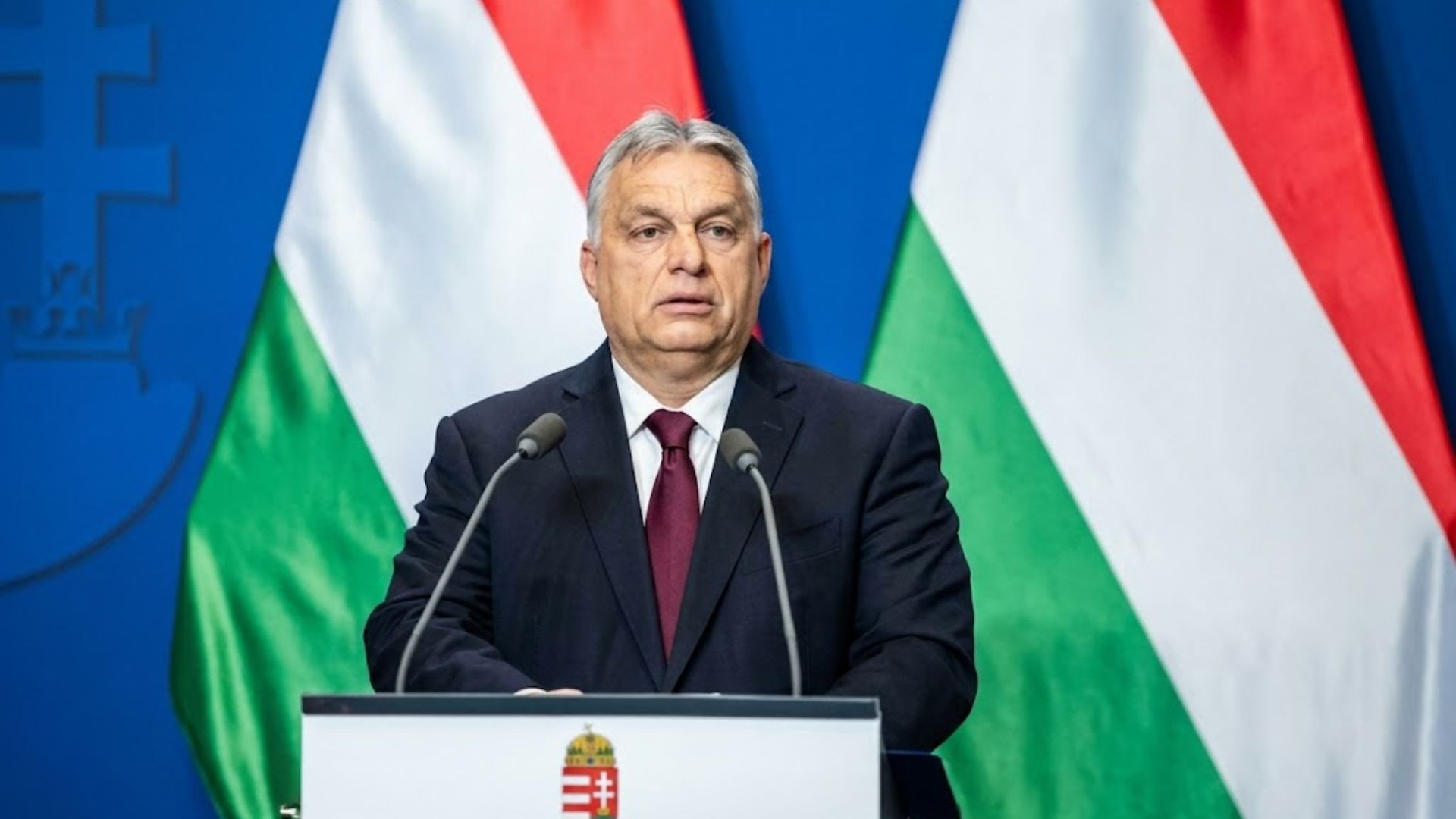
Viktor Orbán Some leaders stay important only inside their own country. Others keep shaping arguments far beyond their borders. Viktor Orbán belongs to that second category. His politics do not remain local for long. They spill into wider debates about democracy, nationalism, identity, migration, the European Union, Russia, Ukraine, and the future direction of Europe itself. That is why every major move he makes attracts attention not just in Budapest but across the continent. As Hungary heads into a pivotal parliamentary election on April 12, 2026, Orbán is facing what Reuters describes as one of the toughest political tests of his 16-year rule. (Reuters)
| Aspect | Details |
|---|---|
| Main Keyword | Viktor Orbán |
| Article Type | Political feature article |
| Word Count | 2500+ words |
| Tone | Human, engaging, easy to read |
| Focus | Power, pressure, Hungary’s future, Europe, and why Viktor Orbán remains at the center of debate |
That alone would be enough to make the moment dramatic. But the situation around Viktor Orbán feels bigger than a normal election battle. This is not simply about whether one leader stays in office. It is about whether a political model that has defined Hungary for years can still hold its ground at a time of economic frustration, public fatigue, and deeper European tension. Polling reported by Reuters on April 9 and April 10 showed Orbán’s Fidesz trailing the opposition Tisza party, suggesting that this contest is far more open and emotionally charged than many of his past campaigns. (Reuters)
That pressure is exactly why Viktor Orbán’s next move matters so much. Supporters still see him as a strong nationalist leader who defends sovereignty and refuses to bend to outside pressure. Critics see him as the symbol of a political system that has pushed Hungary away from core European democratic norms and too close to Moscow. The fact that both views exist so strongly at the same time is what makes him such a magnetic and divisive figure.
Why Viktor Orbán Still Commands So Much Attention
Power changes the way people look at a politician. Once a leader stays in office for a long time, they stop being seen only as an individual and start being seen as a system, an era, a political climate. Viktor Orbán reached that stage years ago. He is no longer just a prime minister in the public imagination. For many people, he has become the face of modern Hungary itself, whether they are proud of that or deeply uncomfortable with it.
That is why the conversation around Viktor Orbán is rarely simple. It is not just about one speech or one campaign promise. It is about everything people think he represents. For his supporters, Viktor Orbán represents stability, strong borders, resistance to outside influence, and a kind of national self-confidence that refuses to apologise. For opponents, Viktor Orbán represents concentration of power, weakening institutions, political patronage, and a national direction that has become too closed, too confrontational, and too isolated.
Very few politicians in Europe create this level of emotional division. But Orbán has managed to stay at the centre of that storm for years because he understands how to turn politics into identity. He does not merely ask voters to support a party. He asks them to choose a vision of the nation. That makes him much harder to treat like an ordinary incumbent.
The Weight of Sixteen Years in Power
Long rule can look impressive from a distance, but it also creates its own dangers. The longer a leader stays in power, the more the public begins attaching every problem to that leader, even if some problems come from outside forces. Over time, victories begin to feel less fresh, and fatigue starts creeping in. That is one of the biggest challenges facing Viktor Orbán now.
After sixteen years in office, he is no longer running as a new force promising change. He is the establishment. He is the system people know. That brings authority, but it also brings accountability. If prices rise, if growth disappoints, if younger voters feel stuck, if public services frustrate people, the anger has somewhere very clear to land. Reuters has reported that Orbán is facing backlash over economic stagnation, rising living costs, and corruption allegations, all while confronting the strongest challenge to his rule in years. (Reuters)
This does not mean his political skills have disappeared. Far from it. Viktor Orbán has survived difficult moments before because he understands power deeply. He knows how to frame a contest, how to energise his base, and how to make supporters feel that voting for him is about protecting something larger than his government. But the mood around a long-serving leader changes when uncertainty grows. Suddenly, experience can start looking like exhaustion. Control can start looking like overreach. Familiarity can start looking like stagnation.
That is the emotional edge of this moment. Orbán is not simply defending a government. He is defending the durability of an entire political era.
Europe Is Watching Because Hungary Matters More Than Its Size
Hungary is not one of Europe’s biggest countries, yet it often occupies a much larger place in political debate than its size would suggest. A major reason for that is Viktor Orbán. His government has repeatedly turned Budapest into a focal point for bigger arguments about what Europe should be, how far national sovereignty should go, and what happens when an EU member state openly challenges the political direction favored by Brussels.
This is why the current moment feels so intense. If Orbán wins again, many will see it as proof that his brand of politics still has real strength even after years of controversy. If he loses, it could signal that one of Europe’s most talked-about political models has finally hit a serious wall. Reuters has described the 2026 Hungarian election as one that could reshape the country’s place in Europe. (Reuters)
That phrase matters because Hungary’s position inside the EU has been one of the most important parts of the Viktor Orbán story. He has never wanted Hungary to disappear into a broader European consensus. Instead, he has often tried to cast himself as the leader willing to resist it. That has made him popular with some nationalist and conservative audiences beyond Hungary, while also turning him into a symbol of defiance for critics who worry about democratic backsliding inside the EU.
The Collision Between Sovereignty and European Pressure
At the heart of the Viktor Orbán story is a powerful political argument. Who should have the final say in national life: a democratically elected national government or a wider European system built on shared rules and expectations? Orbán has built much of his political identity around giving one answer. He presents himself as the defender of Hungarian sovereignty against pressure from Brussels, liberal institutions, and outside forces he says do not understand Hungary’s interests.
That message has worked for him for years because it turns criticism into political fuel. When EU institutions raise concerns, Orbán often reframes those concerns as proof that he is standing firm for the nation. It is a highly effective style because it allows him to convert external pressure into internal loyalty. Yet that same strategy has also deepened conflict between Hungary and European institutions over rule-of-law concerns and fundamental rights. The European Parliament has continued highlighting threats to rights and rule-of-law standards in Hungary, showing that these disputes remain active rather than historical. (European Parliament)
This collision matters because it shapes how Viktor Orbán is seen across Europe. Admirers call him a fighter against elite overreach. Critics call him the face of democratic erosion within the bloc. Both interpretations are politically potent, and both make every new move he makes feel larger than a single domestic calculation.
The Economy Has Turned Into a More Dangerous Issue
Identity politics can carry a leader a long way, but economic frustration has a way of cutting through slogans. When households feel squeezed, when growth remains weak, and when everyday life starts feeling harder, even the most experienced political operator can find the ground shifting under his feet. That is one of the reasons Viktor Orbán is under heavier scrutiny now than he has been for some time.
Reuters has reported that Hungary has faced weak economic performance and rising living-cost pressure, and that these issues are feeding public frustration ahead of the election. It has also reported that Orbán rejected the idea that austerity would be needed after the vote, while maintaining spending promises and wider support measures. (Reuters)
What makes this politically sensitive is that Viktor Orbán has long presented himself as a leader who can protect ordinary Hungarians from outside shocks. That promise becomes harder to sustain when people feel that their own everyday reality is becoming more uncertain. Economic strain does not erase political loyalty overnight, but it changes the emotional tone of elections. It makes voters more restless. It opens more space for challengers. It makes long rule feel less reassuring and more vulnerable.
That is why Orbán’s next move is being watched so carefully. He must convince people not only that he understands their frustration but that he is still the best answer to it after all these years.
The Russia Question Has Refused to Go Away
If the economy is one source of pressure, foreign policy is another. Viktor Orbán’s relationship with Russia has remained one of the most controversial parts of his international image. While most of the EU has tried to isolate Moscow over the war in Ukraine, Orbán has repeatedly taken a different tone, maintaining closer ties and clashing with European partners over related issues. Reuters recently reported that Russia publicly praised Orbán as a pragmatic leader and noted continuing controversy around his links to Moscow. (Reuters)
This matters because foreign policy can become domestic politics very quickly when the stakes are high enough. Critics argue that Orbán’s position makes Hungary look too close to the Kremlin at a time when much of Europe sees Russia as a direct threat. Supporters counter that he is being realistic and acting in Hungary’s interests, especially on energy and national security questions.
Either way, the issue refuses to fade. It adds another layer to the Viktor Orbán debate because it turns him into more than a domestic conservative leader. It makes him a player in a much larger European argument about war, alliances, and strategic direction. That is one reason the current election has drawn such close international attention.
A New Challenger Has Changed the Mood
Long-serving leaders often look unbeatable until the public suddenly senses that a real challenger has emerged. That kind of shift is powerful because it changes the psychology of politics. People who once felt resigned begin to think change might actually be possible. In Hungary right now, that feeling is tied to Peter Magyar and the Tisza party.
Reuters has reported that Tisza is leading in several recent polls and that this represents Orbán’s strongest political challenge in many years. One Reuters report said the Idea Institute found Tisza ahead among decided voters, while another noted a Median projection showing the opposition could even secure a commanding parliamentary majority if polling translated into votes. (Reuters)
This does not guarantee defeat for Viktor Orbán. Elections are not won by headlines alone, and he still has a deeply rooted political machine. But it changes the atmosphere around him. He is no longer campaigning from the position of unquestioned dominance. He is campaigning in a climate where doubt has become more visible, and doubt is dangerous for any long-ruling leader.
Younger Voters Are Sending a Message
One of the most telling signs in politics is not only who is angry now, but who is drifting away for the future. Reuters has reported that younger Hungarian voters are increasingly turning away from Orbán’s Fidesz, with some polls showing especially weak support among the youngest adult age groups. (Reuters)
That matters because it tells a deeper story than one election cycle. It suggests that the Viktor Orbán model may be losing some of its hold over a generation shaped by different anxieties, different expectations, and different ideas about opportunity. Younger voters often react strongly to corruption concerns, economic frustration, education issues, and the feeling that the future is narrowing rather than opening.
If that generational shift continues, it becomes a long-term warning sign. A leader can remain formidable while still facing erosion beneath the surface. Orbán understands politics well enough to know this. That is one reason his next move matters so much. He is not just trying to win a vote. He is trying to prove that his politics can still command loyalty across a changing society.
Why Viktor Orbán Still Cannot Be Counted Out
For all the pressure around him, it would be a mistake to treat Viktor Orbán like a fading figure waiting quietly for the end. He has survived too much for that kind of easy conclusion. He remains one of Europe’s most seasoned political tacticians, with a loyal core base, strong messaging instincts, and years of experience turning high-stakes contests into identity battles.
Reuters has noted that even with opposition momentum, the outcome remains uncertain due to electoral realities, the number of undecided voters, and structural factors that may still help Fidesz. (Reuters)
That is important because Orbán is often strongest when politics becomes emotional and existential. He knows how to make supporters feel that he is not merely another politician but a protective force against disorder, foreign influence, and national decline. In close or volatile elections, that type of message can be extremely effective.
So the real story is not that Viktor Orbán is finished. The real story is that he is under the most visible pressure he has faced in years and must now prove whether his old formula can still dominate a new political moment.
Power, Fatigue, and the Human Side of Leadership
Political analysis often becomes too mechanical. It talks about numbers, maps, parties, and institutions. But leadership is also human. Long years in power change a leader’s image. The same traits that once looked strong can begin to look rigid. The same certainty that once looked reassuring can begin to feel repetitive. Viktor Orbán is facing that human reality now.
For years he projected command and ideological confidence. Many supporters admired that. But when a country grows tired, even confidence can start feeling heavy. People begin asking not only whether a leader is strong, but whether he still understands the current mood. They begin looking for freshness, not just control.
This is why Viktor Orbán’s next move matters on a personal level too. Can he still read the emotional weather of Hungary? Can he adapt without looking weak? Can he persuade restless voters that continuity is safer than change? These are not small questions. They often decide the fate of long-serving leaders more than policy detail alone.
What This Moment Could Mean for Europe
The stakes are not limited to Hungary. If Orbán strengthens his hold, it will be read across Europe as evidence that hard-edged nationalist politics remains highly resilient even under economic and institutional pressure. If he is defeated or seriously weakened, many will read that as a sign that political fatigue, economic frustration, and democratic concerns can eventually catch up even with a very durable populist system.
That is why Europe is paying such close attention. Viktor Orbán has become a reference point in wider ideological battles. His success has inspired some and alarmed others. His fall, if it comes, would carry meaning far beyond Budapest.
Reuters has explicitly framed Hungary’s election as one with the potential to reshape the country’s place in Europe, especially in relation to the EU, Russia, and Ukraine. (Reuters)
So when people ask why Orbán’s next move draws so much attention, the answer is simple. Because it is not just his move. It is a test of an entire political direction whose consequences reach across the continent.
Final Thoughts
Viktor Orbán remains one of the most consequential and controversial political figures in Europe because he stands at the intersection of so many larger arguments. Power and democracy. Sovereignty and Brussels. National identity and European integration. Russia and the West. Stability and fatigue. That is why his next move matters so much right now.
He is entering this moment with real pressure around him. Recent Reuters reporting shows an election that is tighter and more dangerous for him than many before it, shaped by economic frustration, opposition momentum, youth discontent, and continuing criticism over Hungary’s direction inside Europe. (Reuters)
But Viktor Orbán is still Viktor Orbán. He remains politically skilled, deeply experienced, and capable of turning conflict into energy. That is why this story feels so gripping. It is not a simple rise or a simple fall. It is a collision between a long-dominant leader and a changing political mood. It is a clash between a hardened system and a restless electorate. It is a moment where Hungary’s future and Europe’s wider debate seem to meet in one man’s next decision.
That is what makes this more than a national contest. It is a political drama with continental consequences, and Viktor Orbán is still standing in the middle of it.
FAQs
Why is Viktor Orbán such an important figure in Europe?
Viktor Orbán is important because his politics influence wider debates on nationalism, democracy, EU power, Russia, and the future direction of Europe. (Reuters)
Why is Viktor Orbán under pressure right now?
He is under pressure because Hungary faces economic frustration, rising living-cost concerns, stronger opposition polling, and continued criticism over rule-of-law and foreign-policy issues. (Reuters)
Who is challenging Viktor Orbán?
The main challenge is coming from Peter Magyar and the Tisza party, which recent Reuters reports say has led in several polls ahead of the April 12, 2026 election. (Reuters)
Why does Europe care so much about Hungary’s election?
Europe cares because the result could affect Hungary’s relationship with the EU, its stance on Russia and Ukraine, and the wider debate about democratic standards inside the bloc. (Reuters)
Can Viktor Orbán still win?
Yes. Despite the pressure and polling challenges, Reuters notes that the outcome remains uncertain due to undecided voters and structural factors that could still help Fidesz. (Reuters)