Introduction
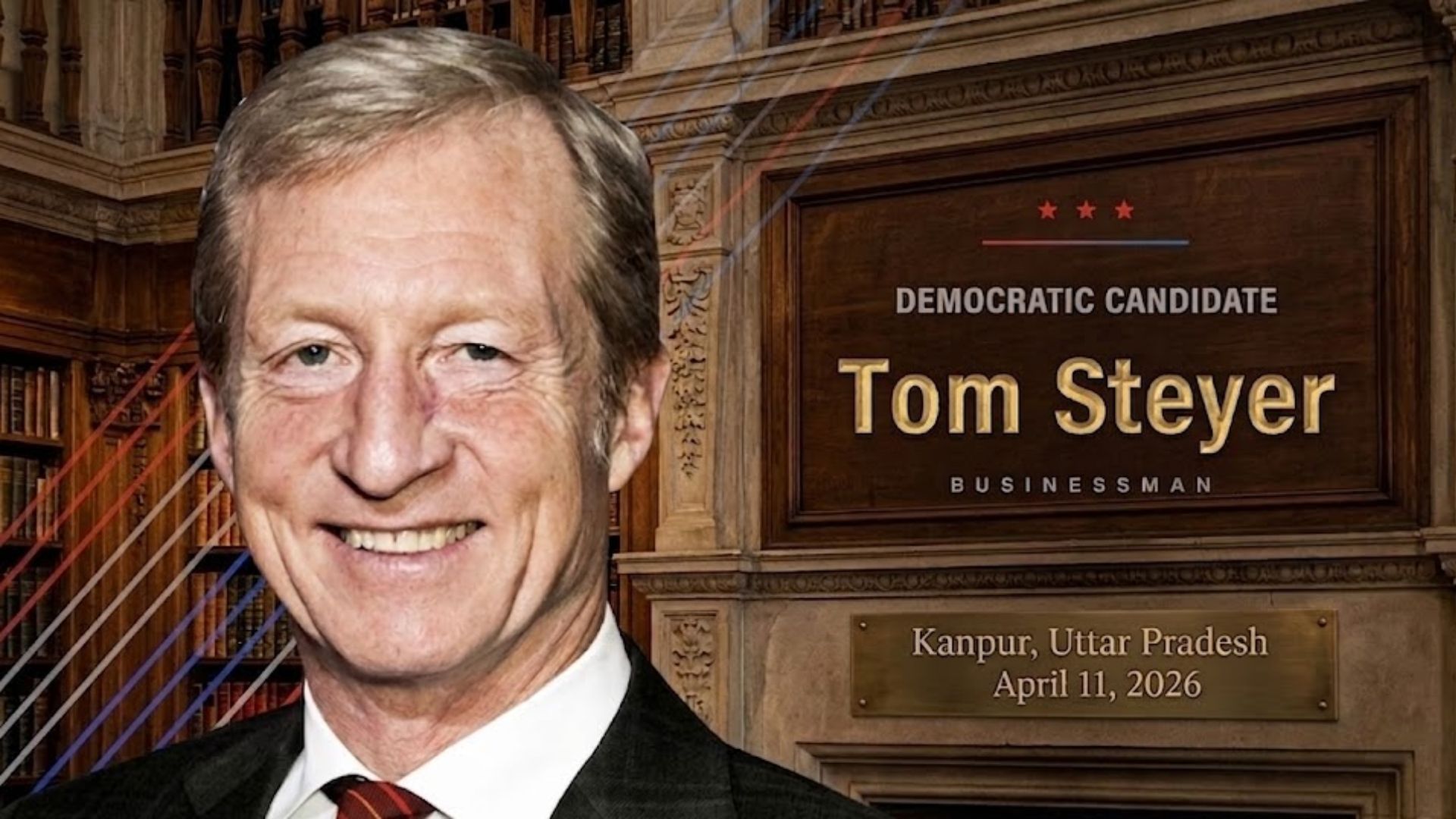
Tom Steyer-California politics has entered one of those moments where everything suddenly feels more open, more restless and more unpredictable than it did just days earlier. In a crowded governor race where multiple big names were already fighting for room, the spotlight has started moving again. And as the field shifts, Tom Steyer is gaining fresh attention at exactly the kind of moment when attention can turn into momentum.
What makes this moment especially interesting is that Tom Steyer is not entering from nowhere. He already has statewide name recognition, money, campaign experience and a public profile built over years of activism, political spending and issue-based messaging. But a campaign is not only about being known. It is about being known at the right time, in the right way, when voters start looking for a candidate who feels steady, serious and newly relevant. That is where Tom Steyer now appears to be benefiting from the changing shape of the race.
There is also something very California about the way this race is unfolding. It is not a simple left-versus-right contest with one clear favorite dominating the field. It is a complicated statewide battle shaped by overlapping ambitions, regional priorities, media attention and the unusual mechanics of the top-two system. In that kind of race, candidates do not always rise in a straight line. Sometimes they rise because the field around them suddenly changes. Tom Steyer is drawing fresh attention in exactly that environment, where being calm while others are rattled can become a real political strength.
For many voters, Tom Steyer has always carried a mixed but memorable image. He is a billionaire, yes, but also a longtime climate advocate and political donor who tried to brand himself less as a boardroom figure and more as a crusader on issues like inequality, corruption and environmental damage. That mix makes him unusual. He can seem both establishment and anti-establishment depending on the moment. In a stable race, that ambiguity can be complicated. In a shaken race, it can suddenly become useful. Tom Steyer can present himself as wealthy enough to self-fund, experienced enough to compete statewide and outsider enough to argue that California still needs a shake-up.
| Topic | Details |
|---|---|
| Main Keyword | Tom Steyer |
| Focus | California governor race and Tom Steyer’s rising attention |
| Race Context | Crowded 2026 California governor contest |
| Key Shift | Field dynamics changed after fresh turbulence in the Democratic race |
| Tone | Human, engaging, news-style |
| Format | Long-form, headings only, no bullets |
Fresh attention does not automatically mean victory. California is too big, too expensive and too politically layered for easy conclusions. But fresh attention does matter because campaigns are living things. They depend on energy, and energy often follows the perception that a candidate is rising while others are stumbling. Tom Steyer now has a chance to be seen through that lens. He is not just another name in the governor race anymore. He is increasingly being viewed as a candidate who could benefit from a new turn in the contest.
That is what makes this story worth watching. The California governor race is moving, the field is unsettled and Tom Steyer has stepped into a moment where political timing may finally be working in his favor.
Why Tom Steyer Is Back in the Center of the Conversation
There are candidates who stay visible because they dominate headlines every day, and there are candidates who re-enter the center of the conversation because the race itself starts bending in their direction. Tom Steyer seems to be in the second category right now. His name has remained in the field for months, but the latest turn in the race has given voters and observers a new reason to look at him more closely.
One reason Tom Steyer is getting renewed notice is simple. He looks durable. In a crowded race, durability is a real asset. Candidates can have media heat for a week and then disappear. They can trend online and still fail to build a lasting campaign. But Tom Steyer has resources, staff, a political network and years of experience operating in high-visibility races. That makes him harder to dismiss as a passing story. Voters who suddenly feel uncertain about other Democratic options may look at Tom Steyer and see someone who is still standing on solid ground.
Another factor is the way recent events have shifted the emotional balance of the field. Turbulence around other Democratic contenders has unsettled the race and pushed many voters into reassessment mode. In that kind of atmosphere, every other major contender is evaluated again. Who looks safer. Who looks steadier. Who can unite enough voters to avoid a damaging split. Tom Steyer gains attention precisely because those questions are suddenly more urgent than before.
There is also a media logic at work. Political coverage often shifts toward figures who might benefit from a shakeup. Once a race changes, journalists and voters start asking who is next in line to capitalize. Tom Steyer fits that frame well because he already has the profile of a plausible statewide contender. He does not need an introduction. He just needs a moment. The race may now be giving him one.
For Tom Steyer personally, this attention is valuable because it helps redefine his candidacy. Instead of being seen only as a billionaire trying once again to convert money and activism into elected office, he can now be framed as a potentially stabilizing Democrat in an unstable field. That is a much stronger position politically. It allows Tom Steyer to speak not just about himself, but about what California Democrats may need right now: steadiness, viability and a campaign built to survive chaos.
This is why the phrase gains fresh attention fits so well. Tom Steyer is not suddenly becoming famous. He was already famous. What is changing is the quality of the attention. It is becoming more serious, more strategic and more connected to the bigger question of who can actually emerge from this race in one piece.
The New Turn in the California Governor Race
Every election has a moment when it stops feeling theoretical and starts feeling volatile. California’s governor race appears to be in one of those moments now. The field was already wide open because the current governor cannot run again, and multiple well-known candidates had been trying to claim their own lane. But recent events have turned a competitive race into a more unstable one.
The clearest immediate shift came from turmoil around a rival Democratic campaign. When a major candidate weakens sharply, that kind of collapse does not stay contained to one campaign. It shakes the whole field. It forces party strategists, donors and voters to start thinking again about who looks strongest, who looks safest and who can actually navigate the top-two system without causing a nightmare outcome. Tom Steyer is drawing fresh attention because this new turn has created political oxygen that did not exist in quite the same way before.
At the same time, Republicans are trying to exploit the opening. That makes the Democratic decision-making problem more serious. If Republicans become more organized while Democrats stay fragmented, the path to the general election becomes riskier for everyone on the left. In such a scenario, a candidate like Tom Steyer can argue that Democrats need someone with enough reach, money and discipline to survive the primary without accidental self-destruction.
The new turn in the race is therefore about more than one controversy or one endorsement. It is about a broader feeling that the contest is being reordered in real time. What seemed like a crowded but manageable Democratic field now looks more anxious. What seemed like a routine Republican challenge now looks somewhat more focused. And what once looked like a race full of equal possibilities now looks like a race where viability matters more than ever. Tom Steyer is benefiting from that shift because he can plausibly sell himself as viable in a very practical sense.
This is why timing matters so much in politics. A candidate can carry the same résumé, the same talking points and the same personal story for months, but once the environment changes, all of it can be interpreted differently. Tom Steyer may be the same candidate he was before. The race around him is what changed. And because the race changed, Tom Steyer suddenly looks more important.
Tom Steyer’s Long Political Journey Still Matters
One of the most important reasons Tom Steyer cannot be dismissed in this race is that he has been building toward moments like this for a long time. He is not a random wealthy entrant testing out politics for fun. He has spent years pouring energy, money and personal identity into public causes. He funded anti-Trump campaigns, climate activism and ballot efforts, and he ran for president before later turning his focus more directly back to California. That long public journey gives Tom Steyer a level of political familiarity that many self-funded candidates never achieve.
That history helps him in two ways. First, it means voters already have some sense of who Tom Steyer is. They may not all like him, but they are not meeting him for the first time. Second, it means he has already learned some painful lessons about what political ambition looks like at scale. Candidates who have lost before are not automatically stronger, but they are often more realistic. Tom Steyer knows what it means to spend heavily and still struggle to connect. He knows what it means to be known but not fully trusted. That experience may now help him run a more disciplined campaign.
There is also a California-specific logic to his return. Tom Steyer has always had stronger thematic ties to California politics than to a national presidential race. Climate, environmental damage, inequality, public frustration with entrenched systems and the idea of reforming old arrangements all fit naturally inside California’s political language.
The more the race shifts from abstract popularity to issue credibility, the more Tom Steyer’s background may help him. He is not just rich. He is rich in a way that has long been connected to political advocacy. That distinction matters because many voters can tolerate wealth more easily when it appears tied to a mission rather than simple vanity. Tom Steyer has worked for years to present himself as someone using wealth to confront big structural problems, especially on climate and corporate power. Whether every voter buys that is another question, but the argument is available to him in a way it is not for every billionaire candidate.
This long journey also gives Tom Steyer a certain stubbornness that may now be an asset. He has already survived skepticism. He has already been mocked, underestimated and treated as overly ambitious. Candidates who keep coming back after all that often develop a thicker political skin. In a shaky field, thick skin is not a small advantage.
The Populist Billionaire Problem and Opportunity
Tom Steyer’s image has always contained a tension that both helps him and hurts him. He is wealthy enough to be seen as part of the elite world many voters distrust. At the same time, he tries to talk like someone fighting for ordinary people against a rigged system. That is why the phrase populist billionaire feels so central to understanding him. It sounds contradictory because it is contradictory, but contradictions sometimes work in politics when they are handled well.
The problem is obvious. Some voters hear Tom Steyer talk about fairness and immediately wonder how a billionaire can authentically represent populist anger. They may see hypocrisy. They may suspect branding. California is full of liberal voters, but it is also full of people deeply skeptical of concentrated wealth and elite influence. Tom Steyer has to climb that hill every time he asks people to see him as a reformer rather than a member of the same class that helped shape the problems.
But there is also opportunity hidden inside that tension. Tom Steyer can make an argument that many less-wealthy politicians cannot: that he is financially independent enough to fight entrenched interests without being controlled by them. In a race where donors, party structures and big institutional networks can matter enormously, he can say he is less vulnerable to pressure because he does not need permission to compete. That claim is never perfect, but in a chaotic field it can sound appealing. A candidate who looks self-sufficient often appears stronger when others are dealing with collapsing support or shifting alliances.
This is especially relevant now. As the Democratic field reacts to recent upheaval, Tom Steyer’s money becomes not just a symbol of privilege but a symbol of resilience. He can keep campaigning. He can keep advertising. He can keep traveling. He can keep defining himself even if external support fluctuates. That is a real advantage in a state as massive and expensive as California.
There is another layer too. Tom Steyer’s brand of wealth is attached to issue politics, especially climate. That gives him a story richer than simple business success. He is not merely running as a rich manager. He is running as someone who has long tried to connect his money to activism. For some voters, that still feels more credible than a standard corporate pitch.
So yes, the populist billionaire label remains awkward. But awkward does not mean weak. In the current race, it may actually help Tom Steyer stand apart from both conventional insiders and purely ideological candidates.
Tom Steyer’s Issue Message Is Becoming More Relevant
Campaigns often become clearer when the race itself becomes messier. That may be happening for Tom Steyer right now. As headlines swirl around scandals, endorsements and tactical fears, issue-based candidates can benefit if voters start longing for something that feels more grounded. Tom Steyer has long had a recognizable issue profile, and recent reporting suggests he is leaning into it in ways that may suit the current moment.
One major example is property tax reform messaging. Tom Steyer has been campaigning to close what he frames as a loophole that benefits large commercial property interests. The message is politically sharp and designed to connect state tax reform to a broader sense of economic unfairness. Whether every voter agrees with the framing is another matter, but it shows Tom Steyer trying to place himself at the intersection of fairness, anti-corporate rhetoric and California pocketbook politics.
That matters because gubernatorial races are not won only by personality. They are won by convincing voters you care about the state’s real pressures. California remains burdened by affordability problems, housing frustration, infrastructure stress, environmental damage and deep anger at systems people think favor insiders. Tom Steyer’s messaging on property taxation, inequality and pollution tries to speak directly to that mood.
There is strategic value in this. In a race destabilized by scandal and vote-splitting fears, the candidate who sounds most issue-focused can begin to look more adult in the room. Tom Steyer may never fully escape the baggage of wealth, but he can still benefit if voters decide they are tired of personality drama and want someone discussing policy with urgency. His issue mix gives him a lane for that kind of appeal.
Of course, issue messaging alone is never enough. California voters have seen many ambitious promises before. But Tom Steyer’s current issue emphasis may still help him because it feels connected to things people can visualize: polluted communities, unfair tax structures and a state economy that often feels tilted toward those already winning. That is fertile ground for a candidate trying to look relevant in a changed race.
The Top-Two System Could Help or Hurt Tom Steyer
California’s top-two primary system hangs over this entire race like invisible weather. It shapes strategy, tone and fear at every level. Under the system, all candidates run on the same primary ballot and the top two finishers move on, regardless of party. That creates both opportunity and danger, especially in a crowded race where one side can accidentally divide itself too much.
For Tom Steyer, the top-two system is both a warning and a chance. It is a warning because Democrats cannot assume safety just because California leans blue. If the Democratic vote gets splintered badly enough, Republicans can become much more competitive than the state’s overall partisan balance might suggest.
But it is also a chance because top-two races reward consolidation. A candidate does not need universal party love. He needs enough concentrated support to finish ahead of most of the field. Tom Steyer may actually benefit if nervous Democrats start prioritizing electability and stability over ideological purity or novelty. In that kind of environment, his resources and statewide name recognition could look very attractive.
The recent chaos around rival campaigns only heightens that dynamic. If one Democratic contender weakens sharply, a share of those voters, donors and endorsers will look for a new home. The top-two system makes that redistribution especially important because even a modest shift can change who reaches the general election. Tom Steyer is well-positioned to receive at least some renewed consideration simply because he is already in the conversation and already built for a long campaign.
At the same time, the system also punishes ambiguity. If Tom Steyer fails to clearly define why he should be the consolidating option, the race may remain fragmented and chaotic. So the top-two structure helps only if he can use this moment to look more essential than before. That is the real challenge in front of him.
Can Tom Steyer Turn Attention Into Momentum
Fresh attention is useful, but campaigns are won by converting attention into actual movement. That means money, volunteers, earned media, voter persuasion and a growing sense that a candidate is not just visible but rising. Tom Steyer now faces that exact test. He has the attention. The question is whether he can turn it into momentum.
The good news for him is that he has tools many candidates would love to have. He has personal wealth, high name recognition, issue familiarity and years of experience in public political combat. He does not need to invent a campaign from scratch. He only needs to sharpen the case for why this race now suits him better than it did a few weeks ago.
The harder part is emotional connection. Tom Steyer has often looked serious, committed and determined, but not always warm or inevitable. California voters may respect him without fully embracing him. That is why this moment is so important. If he can step into the race’s new uncertainty with calm confidence and a sense of purpose, he may begin to feel more like an answer than an alternative. That shift in emotional perception is often what separates a candidate who stays in the pack from a candidate who breaks forward.
Momentum also depends on narrative discipline. Tom Steyer cannot afford to look like he is merely benefiting from someone else’s collapse. He needs to look like he was built for this moment all along. That means emphasizing issues, stability and readiness rather than opportunism. If he gets that balance right, voters may start seeing his fresh attention as deserved rather than accidental.
There is another practical point. In California, momentum often requires the ability to keep communicating across a huge and expensive state. Tom Steyer can do that. Not every candidate can. That alone makes his current attention more durable than a simple media spike. He has the capacity to reinforce whatever positive narrative emerges.
So yes, he can turn attention into momentum. But only if he makes this moment feel purposeful. Attention by itself is a spark. Momentum is what happens when the candidate catches it and keeps it burning.
Tom Steyer’s Biggest Strength May Be Stability
At a time when the field looks unsettled, one of the most underrated political assets is stability. Not excitement. Not novelty. Stability. Tom Steyer may not always be the most electric figure in the race, but right now stability could be exactly what gives him new strength.
Stability in this context means a few things. It means a campaign unlikely to disappear because of fundraising problems. It means a candidate with enough public experience to survive scrutiny. It means a message rooted in recurring themes rather than daily improvisation. And it means someone who can keep operating while the field around him becomes more anxious. Tom Steyer checks many of those boxes.
This does not make him inevitable. But it does make him reassuring in a moment when reassurance has political value. Democratic voters looking at the race right now may feel nervous about fragmentation, scandal and the possibility of mismanaging a favorable state. A candidate who seems solid rather than flashy can suddenly become much more appealing in that atmosphere. Tom Steyer is well placed to benefit from exactly that shift in mood.
Stability also matters to donors and endorsers, even those not yet publicly moving. People who care about winning often drift toward the candidate who seems least likely to collapse. That is one reason political attention around Tom Steyer matters beyond headlines. It may shape behind-the-scenes thinking too. If enough players begin to believe he is one of the safer Democratic bets, the race can change in ways not immediately visible to the public.
And on a human level, stability has emotional power. Voters get tired of drama. They get tired of constant disruption. They sometimes want someone who looks like he can wake up, govern and stay focused. Tom Steyer may not inspire everybody, but he can still benefit if the public mood shifts toward steadiness over spectacle.
What Stands in Tom Steyer’s Way
For all the fresh attention he is receiving, Tom Steyer still faces real obstacles. The first is simple. California is huge, expensive and politically diverse. Fresh attention does not automatically solve the problem of persuading millions of voters across very different regions and priorities. Tom Steyer still has to make his case in a state where many candidates are competing for overlapping Democratic voters.
Another obstacle is identity. The same wealth that makes him resilient also makes him vulnerable. Some voters will never be fully comfortable with a billionaire asking to lead a state so shaped by inequality and affordability stress. Tom Steyer can argue that he is using wealth to challenge unfair systems, but skepticism will remain. That skepticism is not going away just because the field became more chaotic.
He also faces competition from other recognizable Democrats who can make their own arguments about competence and values. Fresh attention for Tom Steyer does not mean the rest of the field disappears. It only means he has a better opportunity to look important within it. Opportunity is not the same thing as victory.
And finally, there is the danger of seeming too calculated. If voters feel Tom Steyer is benefiting too smoothly from others’ troubles, they may recoil. Politics rewards readiness, but it can punish obvious opportunism. He has to walk that line carefully.
These are real obstacles. But they are the kind of obstacles viable candidates face, not the kind that make a candidacy irrelevant. That distinction matters. Tom Steyer’s challenge now is to prove that his renewed attention reflects actual strength rather than temporary curiosity.
Final Thoughts
Tom Steyer is gaining fresh attention because the California governor race has genuinely changed. A contest that was already crowded has become more unstable, more strategic and more anxious. Turbulence on the Democratic side, a sharper Republican push and the ever-present pressure of the top-two system have all combined to make viability feel more important than before. In that environment, Tom Steyer suddenly looks more consequential.
He brings money, name recognition, issue focus and a long political history that gives him staying power. He also brings baggage, especially around wealth and authenticity. But elections are not decided in the abstract. They are decided in moments. And this particular moment may be one that suits Tom Steyer unusually well.
The big question now is whether he can turn that fresh attention into something larger. Can he become the Democrat who looks stable in a shaky field. Can he persuade voters that he is not just famous, but ready. Can he make his issue message feel like the serious answer to a race that is starting to look messy and fragile.
Those questions are still open. But one thing is already clear. Tom Steyer is no longer just part of the governor race background. He is increasingly part of the central conversation. And in politics, that shift alone can change everything.
FAQs
Why is Tom Steyer getting fresh attention in the California governor race?
Tom Steyer is getting fresh attention because the race has become more unsettled and voters are reassessing which Democratic candidates look strongest and most stable.
Is Tom Steyer still considered a major contender?
Yes, Tom Steyer is still seen as one of the notable Democratic names in the California governor race.
What issues is Tom Steyer focusing on?
Tom Steyer is focusing on issues such as tax fairness, environmental damage, inequality and broader structural reform in California.
How does California’s top-two primary affect Tom Steyer?
The top-two system could help Tom Steyer if Democratic voters consolidate around candidates viewed as viable and stable, but it could hurt him if the Democratic vote remains too fragmented.
What is Tom Steyer’s biggest strength right now?
His biggest strength may be stability. He has money, name recognition and a campaign structure that can keep functioning even while the field around him becomes more turbulent.
What is Tom Steyer’s biggest weakness?
His wealth remains a challenge because some voters may question whether a billionaire can authentically represent ordinary Californians’ frustrations.